Thai font · FREE
TH Sarabun New
สารบรรณ

Information verified as of June 2026
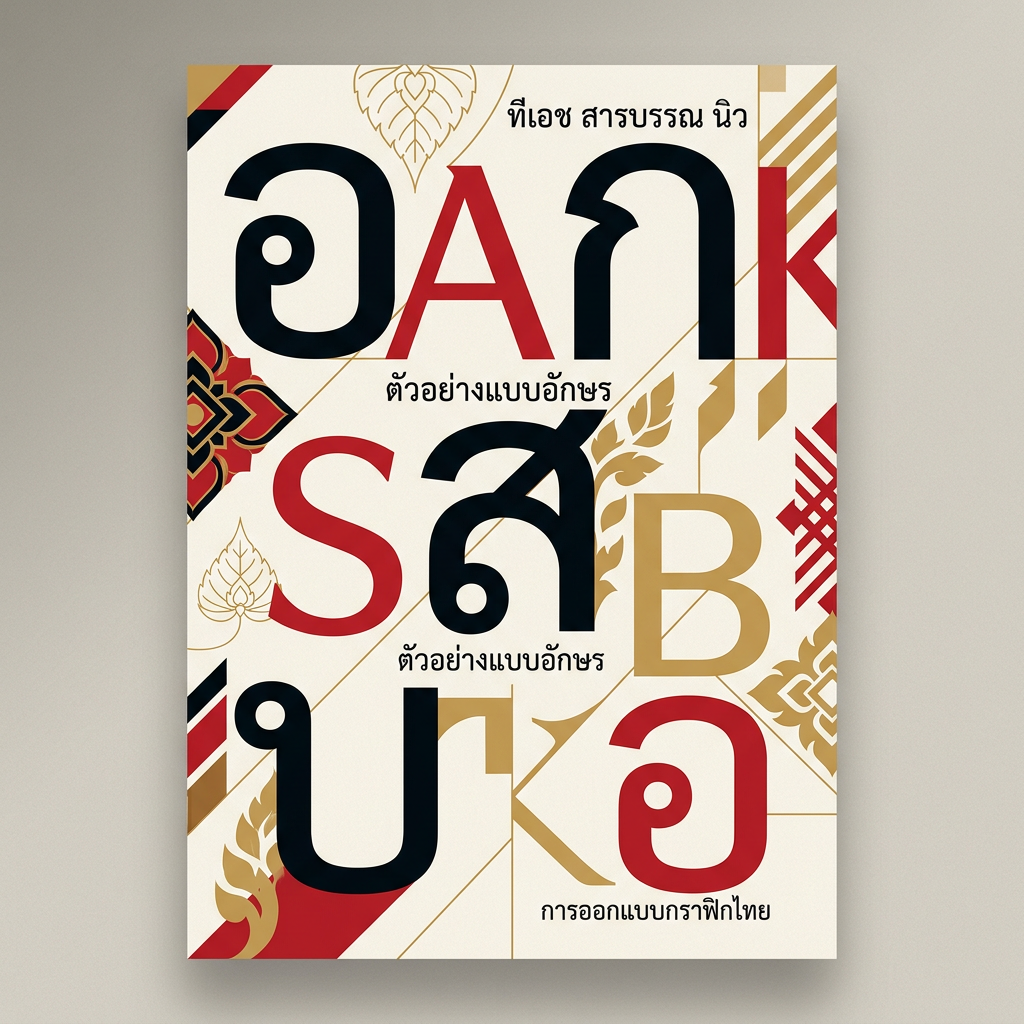
What TH Sarabun New is
TH Sarabun New is Thailand’s official government document font: the 2011 revision of TH Sarabun PSK, the looped sans that the Council of Ministers named a National Font on 7 September 2010. Suppakit Chalermlarp designed the original; the Software Industry Promotion Agency (SIPA) and the Department of Intellectual Property published the revision through f0nt.com on 19 August 2011, and that single release page has logged more than 10.2 million downloads.
The National Font project (ฟอนต์แห่งชาติ) released 13 typefaces with a TH prefix and ordered state agencies to stop using private-sector fonts by 5 December 2010. Sarabun was the one singled out for official correspondence. The Government Gazette has set its pages in it since January 2011, replacing Angsana New, the Windows-bundled serif that had been the de facto standard. TH Sarabun New fixed the defects reported in TH Sarabun PSK and became the file government offices actually install.
One naming trap needs clearing up. Google Fonts hosts Sarabun — a separate, later release in the same design lineage, redrawn with eight weights under the SIL Open Font License. The two are not the same files and not the same license. Government Word and PDF templates expect TH Sarabun New; web projects should load Sarabun.
Character design and tone
TH Sarabun New is a looped humanist sans: near-monolinear strokes, clear circular consonant heads, and generous counters built to survive laser printing and photocopying. The loops on ก, ถ, and ภ stay open at 14–16pt, which is where most Thai official documents set their body text.
The tone is deliberate bureaucratic neutrality. Next to Angsana New, the serif it displaced, TH Sarabun New drops the contrast and the dated terminal detailing; the result reads cleaner at the same size and photocopies without filling in. It expresses nothing, which for a form, a memo, or a gazette page is the entire job.
The Latin companion is a plain humanist sans sized to sit evenly with the Thai, so bilingual official documents — visa forms, university transcripts, ministry letterheads — hold a consistent texture.
Weights and availability
TH Sarabun New ships two weights, Regular and Bold, each with a true italic — four files in total. There is no light, medium, or display weight; the National Fonts were document fonts, not branding systems. Version 1.35, dated 15 November 2019, fixed Thai rendering problems in Microsoft Office for Mac and is the file to install today.
The font is not on Google Fonts. The Google Fonts family called Sarabun is the later eight-weight OFL release. For anything that must match government templates byte for byte, use the TH Sarabun New files from f0nt.com.
How to download TH Sarabun New
TH Sarabun New is a free download from f0nt.com, the channel SIPA used to distribute the National Fonts. Two legitimate sources:
- f0nt.com — the TH Sarabun New release page carries the current version (1.35) with all four files. This is the page Thai users searching “th sarabun new ดาวน์โหลด” are looking for.
- Font Library — the THSarabun New entry mirrors the four cuts under the GNU GPL for users who prefer an English-language source.
Skip the ad-heavy font aggregator sites. They host outdated versions, and the font is already free at the source.
Best use cases
TH Sarabun New is the correct choice whenever a document must match Thai government conventions. Strong briefs:
- Official correspondence, memos, and reports for Thai ministries and agencies
- University theses and coursework where templates specify TH Sarabun
- Government PDF forms, tender documents, and anything destined for the Government Gazette workflow
- Legal and administrative documents exchanged with the Thai public sector
Where it doesn’t fit: branding and display work (two weights cannot carry a hierarchy), and web projects, where the same skeleton is available as Sarabun with eight weights and proper webfont packaging. For UI work, Noto Sans Thai or IBM Plex Thai offer wider systems.
Pairings
TH Sarabun New rarely needs a pairing — government documents set everything in it — but mixed workflows have three natural partners. Three pairings:
- Angsana New — the legacy serif, still present in older templates that mix both
- Sarabun — the web counterpart from the same lineage, for sites that mirror printed documents
- Noto Sans Thai — fallback stack insurance for screens where neither is installed
See /learn/typography/ for document typography guidance.
Licensing
TH Sarabun New is free software under GPL 2.0 with the font exception: documents that embed the font are not themselves covered by the GPL. SIPA worked with the Department of Intellectual Property to amend the National Font license to these terms, so commercial use, redistribution, and embedding in PDFs and Word files are all permitted. The license note is published on the f0nt.com release page; the Font Library entry states the GPL as well. The font remains copyright Suppakit Chalermlarp and SIPA (2010–2011).
Information verified as of June 2026
Sources
- Thailand's Council of Ministers announced the 13 National Fonts on 7 September 2010 and required agencies to stop using private-sector fonts by 5 December 2010; SIPA and the Department of Intellectual Property released the fonts through f0nt.com.—Wikipedia, National Fonts (accessed Jun 13, 2026)
- TH Sarabun New launched on 19 August 2011 as the revision that fixed defects in TH Sarabun PSK; version 1.35 (15 November 2019) fixed Thai-language problems in Microsoft Office for Mac, and the license was amended to GPL 2.0 with font exception. The f0nt.com release page records over 10.2 million downloads.—f0nt.com release page for TH Sarabun New (accessed Jun 13, 2026)
- TH Sarabun New was designed by Suppakit Chalermlarp and ships in Regular, Bold, Italic, and Bold Italic under the GNU General Public License.—Font Library entry for THSarabun New (accessed Jun 13, 2026)
- Sarabun was made the official typeface for Thai government documents in 2010, replacing the previous de facto standard Angsana, and has been used in the Government Gazette since January 2011.—Wikipedia, Thai typography / National Fonts (accessed Jun 13, 2026)